Biography · Kai-Fu Lee
He was the earliest ethnic Chinese AI researcher to reach the top floor of Silicon Valley, and the earliest to forecast a "bipolar Sino-American AI age." When that age arrived, his own 01.AI did not become the face of Chinese AI.
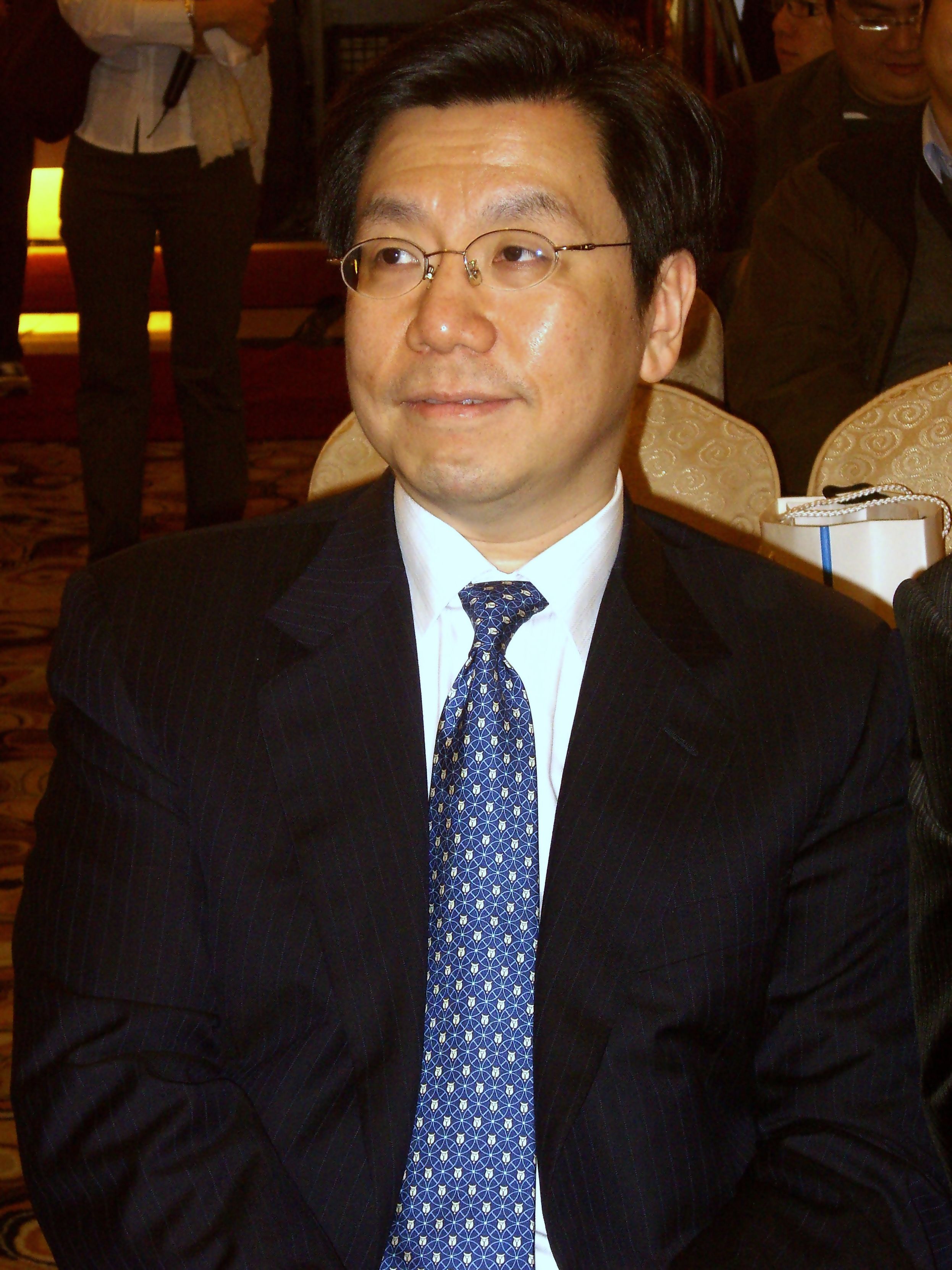
Taipei, Oak Ridge, and an Apple II
Kai-Fu Lee (李开复, 1961–) was born on 3 December 1961 in Taipei, Taiwan. His father Lee Tien-min was a political scholar and a former member of the Sichuan Legislative Yuan; after the Kuomintang's retreat to Taiwan in 1949 he taught at National Chengchi University. His mother Wang Yaqing was his father's second wife. Of the family's six children, Kai-Fu was the youngest — separated from the eldest sister by nearly thirty years; the elder brother who would later take him to America, Kai-Ning, was more than twenty years his senior.
At eleven he went to the United States with his elder brother and entered a Catholic high school in Oak Ridge, Tennessee — a Taiwanese boy with no English in a small Southern town. In his memoir he recalls the first year as one survived almost entirely by gestures. But he learned fast: fluent English in two years, and within three he was student council president. In high school the school acquired an Apple II, and he encountered BASIC for the first time. The feel of controlling a screen with a keyboard he later called "addictive."
In 1979 he entered Columbia University, originally to study law, but after a year switched to computer science. In 1983 he graduated with the highest honours and entered Carnegie Mellon University (CMU) for a doctorate, supervised by Turing Award laureate Raj Reddy, then America's leading figure in speech recognition.
Sphinx: The First Speaker-Independent Continuous Speech-Recognition System
Lee's doctoral thesis attempted what was then thought impossible: a speaker-independent, continuous, large-vocabulary speech-recognition system. Until then, mainstream speech recognition either required each user to train the system on his own voice (speaker-dependent), or could only recognise isolated words.
His chosen path was heretical at the time: abandon the linguistic rules of expert systems and bet everything on hidden Markov models (HMMs), a purely data-driven statistical method. Reddy at first resisted: "Expert systems are CMU's tradition. Why would you smash CMU's name?" Lee answered with a line that has been quoted in AI circles ever since: "I trust data. I do not trust rules."
In 1988 the system he built was named Sphinx — the first speaker-independent, continuous, large-vocabulary speech-recognition system in history. Business Week listed it among the year's most important scientific innovations, and it became the technical ancestor of every commercial voice assistant since, from Siri to Alexa. The same year Lee received his doctorate from CMU and, after a brief stint as faculty there, joined Apple.
Apple, SGI, Microsoft: Three Silicon Valley Chapters
In 1990 Lee joined Apple Computer to lead a voice-assistant project called Casper. He has described in his memoir how, on a live ABC morning broadcast, he demonstrated Casper picking up and understanding a phone command — the first time the general public had seen a "computer that talks" on television. Steve Jobs had not yet returned to Apple in 1992 and was not part of Casper, but the demo gave early-1990s Silicon Valley a clear picture of the future: voice would be the next stop in human-computer interaction.
In 1996 he left Apple for Silicon Graphics (SGI) to lead Cosmo, a 3D web browser. SGI was already in decline. In 1998 Microsoft hired him for a new mission: return to China and build, from nothing, Microsoft Research China.
China then had no truly world-class research institution. Lee spent two years building it inside the Sigma Building in Beijing's Zhongguancun, flying himself to Tsinghua, Peking University, the University of Science and Technology of China, and Shanghai Jiao Tong to recruit, and pulling in a generation of researchers — Zhang Yaqin, Harry Shum (Shen Xiangyang), Zhang Hongjiang, and others — who would later define China's AI scene. In 2001 the lab was upgraded to Microsoft Research Asia (MSRA) — later called the "Whampoa Military Academy of Chinese AI," its alumni dispersed across Google, Facebook, Apple, Alibaba, ByteDance, Tencent, and Huawei, forming much of the backbone of the Chinese AI industry today.
Google China and a Public Lawsuit
In July 2005 Lee announced that he would join Google as president of Google China, with a salary of 10 million dollars plus stock. Microsoft promptly sued both him and Google, alleging breach of a non-compete and theft of trade secrets. The trans-Pacific case made headlines in Silicon Valley and Beijing alike, and ended in an out-of-court settlement: Lee was allowed to join Google with some business restrictions. That year he became the most prominent ethnic Chinese executive in China's internet industry.
For the next four years he led google.cn to roughly 30 percent of the Chinese search market, in a long standoff with Baidu. In early 2010 Google formally withdrew from mainland China after the "Operation Aurora" attack — but Lee had already left.
In September 2009 he resigned from Google and founded Sinovation Ventures (创新工场) in Beijing. From researcher to manager to investor, he completed a thorough transformation.
Sinovation Ventures and "AI Superpowers"
Sinovation Ventures was at first a broad early-stage fund. From 2014 it gradually focused on AI — a return to Lee's professional judgement. He founded an AI institute and pulled in scholars including Tong Zhang, Wang Yonggang, and Yang Zhilin (杨植麟, 1992?–) (later founder of Moonshot AI / Kimi); he invested in Meitu, Zhihu, VIPKid, 4Paradigm, Megvii, Horizon Robotics, and SenseTime — a roster that became the backbone of China's first wave of AI start-ups.
In 2017 he was diagnosed with stage IV lymphoma. During chemotherapy in Taipei that year, he reconsidered his relationship with time and wrote Making Peace With Death. The next year he published AI Superpowers: China, Silicon Valley, and the New World Order — a book that landed with resonance in the West, the first systematic account in English to tell American readers: "China is no longer merely an imitator; Chinese AI is rising on its own path and at its own pace." His thesis of "the bipolar Sino-American AI age" became one of the most-cited forecasts of the next five years.
Between 2018 and 2022 he was the most internationally visible spokesperson for Chinese AI — appearing on 60 Minutes, on TED, in Davos, and clashing with Musk on Twitter over AI risk.
01.AI: An Attempt That Did Not Become the Face
In March 2023, four months after the launch of ChatGPT, Lee announced in Beijing the founding of 01.AI (零一万物), where he would be CEO. It was the first time in his career that he had taken direct charge of a large-model company — both coach and player at once.
The start was rapid. In November 2023 the open-source Yi series rose to the top of Hugging Face's English leaderboard; in May 2024 Yi-Large matched GPT-4 on a number of Chinese benchmarks. Funding came as easily: within a year the company crossed the unicorn threshold of one billion dollars in valuation.
But from the second half of 2024 the script began to drift. The Chinese large-model market entered a price war and the inward spiral of "the six little dragons"; pre-training costs soared while the path to commercialisation remained unclear. In December 2024, in a public interview, Lee announced that 01.AI would sharply scale back its pre-training investment, sell its core compute resources to Alibaba, and pivot to applications and vertical industries. To the outside world this read as a half-surrender — a company founded to be "China's OpenAI" voluntarily ceding the most important position, that of the foundation model.
Meanwhile Doubao (豆包) from ByteDance, Tongyi from Alibaba, the V3 / R1 series from DeepSeek (深度求索), Zhipu AI and Kimi from Moonshot AI broke out one after another in 2024 and 2025. The "Chinese AI national team" that 01.AI had once been seen as did not become the most prominent face of the contest, and was instead overtaken by several younger founders.
Selected Works
| Year | Work / Event | Significance |
|---|---|---|
| 1988 | Doctoral thesis Sphinx (CMU) | First speaker-independent continuous large-vocabulary speech-recognition system in history |
| 1990–1996 | Apple Casper voice-assistant project | Earliest attempt to bring voice interaction into consumer electronics |
| 1998 | Founds Microsoft Research China (later upgraded to MSRA) | Lays the talent foundation of Chinese AI research |
| 2005–2009 | President of Google China | Leads google.cn's search-market battle with Baidu |
| 2009 | Founds Sinovation Ventures | One of the earliest Chinese institutions to invest systematically in AI |
| 2018 | AI Superpowers: China, Silicon Valley, and the New World Order | Systematically introduces the rise of Chinese AI to the West |
| 2023 | Founds 01.AI; releases Yi series of large models | Steps directly into the front line of large-model entrepreneurship |
| 2024 | Yi-Large released; pivot to the application layer late in the year | An unfinished Chinese attempt at a foundation model |
Historian's Note
Historian's Note
Kai-Fu Lee has lived four turns of identity: researcher, manager, investor, founder — each landing on a key node of the Chinese AI wave. In 1988 his Sphinx placed an ethnic-Chinese researcher at the centre of speech recognition for the first time. In 1998 his Microsoft Research China supplied Chinese AI with its first generation of world-class talent. In 2018 his AI Superpowers gave the West its first complete translation of "Chinese AI." Any one of these would have been enough to enter the chronicle. When he stepped onto the field himself in 2023 to found 01.AI, the curve seemed to gather to its natural close — he knew the road, knew the people, knew the capital, knew the international voice. Yet at the most decisive juncture, the foundation model itself, he could not outrun ByteDance, Alibaba, and a small Hangzhou company called DeepSeek. This is no failure of Lee alone but the more complex signal of an age — the face of the AI age may not be the most prestigious researcher, nor the storyteller best at prophecy, but the young team, less famous, willing to put all its chips on compute and open source. The latecomer who reads this history should see his real contribution as a bridge — he led Chinese and American AI from staring across the strait into speaking across it — and should also see what 2024 made of that bridge: when both shores begin to walk on their own, the bridge-builder need not still be the fastest walker.
Eyewitness Accounts
Call for contributions
If you worked with Kai-Fu Lee in Reddy's lab at CMU, on the Apple Casper team, at SGI, at Microsoft Research China (MSRA), at Google China, at Sinovation Ventures, or at 01.AI, please contribute on GitHub.
References
- Lee, Kai-Fu (1989). Automatic Speech Recognition: The Development of the SPHINX System. Kluwer Academic Publishers. (Based on his CMU PhD thesis.)
- Lee, K.-F. (2018). AI Superpowers: China, Silicon Valley, and the New World Order. Houghton Mifflin Harcourt.
- 李开复 (2009). 《世界因你不同》. 中信出版社. [Lee Kai-Fu, Making a World of Difference, CITIC Press; Chinese autobiography]
- 李开复 (2015). 《向死而生:我修的死亡学分》. 中信出版社. [Lee Kai-Fu, Making Peace With Death, CITIC Press]
- Microsoft Corp. v. Google Inc. and Kai-Fu Lee, King County Superior Court, Case No. 05-2-23561-6 SEA (2005).
- 01.AI (2023). "Yi: Open Foundation Models by 01.AI." Technical report, November 2023.
- Bloomberg (2024). "Kai-Fu Lee's 01.AI Pivots Away From Pre-Training Race." December 2024.
- Reddy, Raj (1976). "Speech Recognition by Machine: A Review." Proceedings of the IEEE, 64(4), 501–531. (His supervisor's foundational review.)
- 60 Minutes (2019). "The AI Race: Who Will Win?" CBS News, January 13, 2019. (Interview with Kai-Fu Lee.)
- Lee, Kai-Fu & Chen, Qiufan (2021). AI 2041: Ten Visions for Our Future. Currency.