Biography · Demis Hassabis
A boy on a chessboard, a doctor of neuroscience, a Nobel laureate in chemistry — one and the same man.
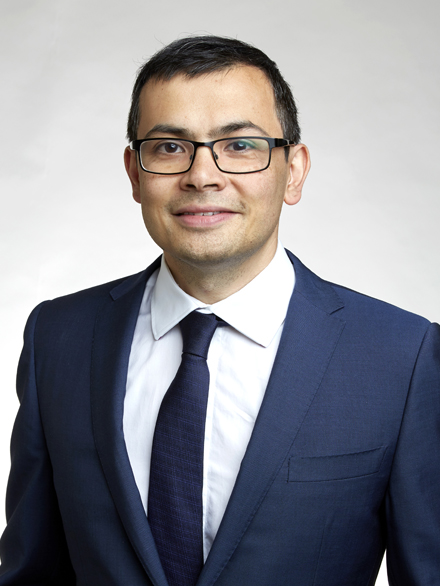
A Boy on a Chessboard
Demis Hassabis (1976–) was born in London in 1976 to a Greek-Cypriot father and a Singaporean Chinese mother. The family had no academic background; his father owned a toy shop and composed music as a hobby.
When he was four, Hassabis happened to see his father and uncle playing chess. Two weeks later, he beat his father. That changed everything. At nine he was the British under-ten chess champion; at eleven his rating briefly placed him second in the world for his age, after only Judit Polgár. At thirteen he earned the title of Master.
Yet he did not take the road of a professional chess player. After his rating crossed 2300, the boy turned his eyes to another "game played in squares" — video games. He used the prize money to buy a ZX Spectrum and taught himself to program.
A Game-Design Prodigy on Oxford Street
In the early 1990s, the teenage Hassabis joined the British studio Bullfrog Productions on the strength of his marks and his programming, founded by Peter Molyneux, later regarded as the godfather of British games. In 1994, at seventeen, Hassabis served as lead designer and chief programmer on Theme Park — a simulator in which players run an amusement park. The game sold more than fifteen million copies across platforms, founded the management-simulation genre, and is still regarded by the industry as a classic.
The same year he entered Queens' College, Cambridge, to read for the Computer Science Tripos. In 1997 he graduated with a Double First.
After Cambridge he worked briefly at Lionhead Studios, contributing to the AI design of Molyneux's Black & White, in which a virtual creature learned. In 1998 he founded Elixir Studios, producing Republic: The Revolution (2003) and Evil Genius (2004). Almost a decade of high-pressure work in the games industry left him with engineering muscle memory for the problem of "learning to make decisions in a constrained environment."
But he knew that games were a transition.
The Hippocampus and "Imagination"
In 2005 Hassabis closed Elixir and entered University College London's Gatsby Computational Neuroscience Unit for a doctorate, supervised by Peter Dayan, one of the founders of computational neuroscience. The Gatsby was at that time the most important crossroads in the world for AI and brain science. Hinton had been its founding director.
His subject was the hippocampus, the brain's organ of memory and spatial navigation. With Eleanor Maguire he made a remarkable discovery: amnesic patients with hippocampal damage could neither recall the past nor imagine the future.
Their 2007 paper in PNAS, Patients with Hippocampal Amnesia Cannot Imagine New Experiences, unified memory and imagination at the level of the brain — both share one mechanism, the recombination of fragments of memory into novel scenes. Science named it among that year's ten breakthroughs.
In 2009 he received his doctorate. At thirty-three, he had already left a mark on two unrelated fields: games and neuroscience. He intended to combine them.
DeepMind: Research as a Company
In September 2010 Hassabis founded DeepMind Technologies in London with Shane Legg and Mustafa Suleyman. Legg was an early academic champion of the term AGI — Artificial General Intelligence; Suleyman was Hassabis's childhood friend. The founding manifesto was unambiguous: DeepMind's mission was to "solve intelligence, then use it to solve everything else."
In December 2013 the lab presented a quietly seismic paper at a NeurIPS workshop, Playing Atari with Deep Reinforcement Learning. With a single architecture — a Deep Q-Network (DQN) — they had taught an agent to play forty-nine Atari games directly from screen pixels, reaching or surpassing human level in more than half. It was the first successful marriage of deep learning and reinforcement learning on a general perception–decision task.
In January 2014 Google acquired DeepMind for roughly 650 million US dollars. Hassabis insisted on two conditions: the lab would remain in London and operate independently, and an ethics-and-safety committee would oversee its research direction.
Go: Fan Hui, Lee Sedol, Ke Jie
From 2014, DeepMind launched the AlphaGo project, with David Silver (1976–) leading the algorithms and Hassabis the overall strategy. Go had long been called AI's holy grail — its state space of about 10^170 dwarfed chess, and traditional search was helpless against it.
In October 2015 AlphaGo beat the European Go champion Fan Hui 5–0 behind closed doors in London — the first time a computer had defeated a professional on a 19×19 board with no handicap. The paper Mastering the game of Go with deep neural networks and tree search appeared in Nature in January 2016.
In March 2016, in Seoul, AlphaGo beat the world champion Lee Sedol (1983–) 4–1 in a five-game match. The thirty-seventh move of the second game — a "shoulder-hit" — was hailed as a move never seen before in the recorded history of Go. After the match Lee said: "AI has not become stronger. AI has become more beautiful."
In May 2017, in Wuzhen, AlphaGo Master defeated Ke Jie 3–0. Ke Jie wept as he left the board. Hassabis announced the retirement of AlphaGo and turned the team to more fundamental scientific questions.
That October AlphaGo Zero appeared in Nature — using no human game records at all, it surpassed every previous version through self-play in forty days. In December AlphaZero generalised the approach to chess and Japanese shogi, reaching world-class strength in nine, twelve, and four hours respectively. Three boards, one network, one method.
AlphaFold: A Fifty-Year Problem in Biology
The victories on the board drew the spotlight, but a different question pressed harder on Hassabis: could the same method solve a real problem in science?
He chose protein folding — biology's grand challenge of fifty years. Proteins fold from sequences of amino acids into three-dimensional structures, and structure determines function; predicting structure from sequence by computation, however, was extraordinarily difficult. Since 1994 the biennial CASP (Critical Assessment of protein Structure Prediction) competition had measured the best methods, whose median GDT scores had drifted between 40 and 60 for decades.
At CASP13 in 2018, DeepMind first submitted AlphaFold, breaking through a median GDT of 70. It made headlines.
At CASP14 in November 2020, AlphaFold 2 descended from the sky — a median GDT of 92.4, with predictions for most proteins reaching or approaching experimental accuracy. The chair John Moult announced publicly: "This problem, in some sense, is solved."
In July 2021 DeepMind published in Nature and released the AlphaFold 2 code and weights as open source. The same month, with the European Molecular Biology Laboratory (EMBL-EBI), they launched the AlphaFold Protein Structure Database. A year later it had grown to roughly 200 million proteins — covering nearly every protein known to science. Before AlphaFold, half a century of work by thousands of laboratories at a cost of tens of billions of dollars had resolved only about 170,000 structures experimentally.
In May 2024 AlphaFold 3 appeared in Nature, extending prediction to protein–ligand, protein–DNA, and protein–RNA complexes — to arbitrary molecular assemblies.
The Nobel Gift
In April 2023 Google announced the merger of Google Brain and DeepMind into Google DeepMind, with Hassabis as CEO. Two AI lines that had run independently for over a decade joined under one roof.
On 9 October 2024 the Royal Swedish Academy of Sciences awarded the Nobel Prize in Chemistry jointly to David Baker (University of Washington), Hassabis, and John Jumper (DeepMind), for their breakthroughs in protein design and structure prediction. Hassabis became the first Nobel laureate in chemistry from the AI field, at the age of forty-eight.
In its statement the Academy remarked that AlphaFold had turned "a fifty-year dream into reality" and that life science had entered an age remade by algorithms.
Selected Works
| Year | Work | Significance |
|---|---|---|
| 1994 | Theme Park (Bullfrog) | Foundation of the management-simulation genre |
| 2007 | "Patients with Hippocampal Amnesia Cannot Imagine New Experiences", PNAS | Unified memory and imagination at the neural level |
| 2013 | "Playing Atari with Deep Reinforcement Learning", NIPS Workshop | The birth of deep reinforcement learning |
| 2016 | "Mastering the game of Go with deep neural networks and tree search", Nature | AlphaGo defeats a professional player |
| 2017 | "Mastering the game of Go without human knowledge", Nature | AlphaGo Zero and AlphaZero |
| 2021 | "Highly accurate protein structure prediction with AlphaFold", Nature | AlphaFold 2 reaches experimental accuracy at CASP14 |
| 2024 | "Accurate structure prediction of biomolecular interactions with AlphaFold 3", Nature | Structure prediction for arbitrary molecular complexes |
| 2024 | Nobel Prize in Chemistry (with David Baker and John Jumper) | The first Nobel Prize in Chemistry from the AI field |
Historian's Note
Historian's Note
Hassabis's life held four possibilities. He could have been a chess master — his boyhood rating already promised the future of a grandmaster. He could have been a games maker — Theme Park sold fifteen million copies, enough to keep him in comfort for life. He could have been a neuroscientist — his work on the hippocampus made Science's ten breakthroughs of the year. He could have been the chief executive of an AI company — DeepMind, after AlphaGo and AlphaFold, became one of the most important laboratories on earth. He stopped at none of these; he stacked them, layer upon layer, until at forty-eight he walked up to the dais in Stockholm. His path teaches a lesson: the games of intelligence are not shallow — chess and Go drill in the muscles of state spaces, value functions, and long-horizon planning; the games industry is not slight — every NPC scheduling routine in Theme Park is a miniature of reinforcement learning; neuroscience is not off-topic — the hippocampus's "memory as imagination" left a prototype for deep reinforcement learning. Geoffrey Hinton (1947–) taught machines to see; Ilya Sutskever (1986–) taught them to speak; Hassabis proved that machines can play, can fold proteins, can win a Nobel. The games of intelligence, it turns out, can become breakthroughs in science.
Eyewitness Accounts
Call for contributions
If you worked with Hassabis at Bullfrog, Lionhead, Elixir, the UCL Gatsby Unit, or DeepMind, or witnessed the AlphaGo or AlphaFold projects, please contribute on GitHub.
References
- Hassabis, D., Kumaran, D., Vann, S. D., & Maguire, E. A. (2007). "Patients with Hippocampal Amnesia Cannot Imagine New Experiences." PNAS, 104(5), 1726–1731.
- Mnih, V., Kavukcuoglu, K., Silver, D., et al. (2013). "Playing Atari with Deep Reinforcement Learning." NIPS Deep Learning Workshop; full version in Nature (2015), 518, 529–533.
- Silver, D., Huang, A., Maddison, C. J., et al. (2016). "Mastering the game of Go with deep neural networks and tree search." Nature, 529, 484–489.
- Silver, D., Schrittwieser, J., Simonyan, K., et al. (2017). "Mastering the game of Go without human knowledge." Nature, 550, 354–359.
- Silver, D., Hubert, T., Schrittwieser, J., et al. (2018). "A general reinforcement learning algorithm that masters chess, shogi, and Go through self-play." Science, 362(6419), 1140–1144.
- Jumper, J., Evans, R., Pritzel, A., et al. (2021). "Highly accurate protein structure prediction with AlphaFold." Nature, 596, 583–589.
- Abramson, J., Adler, J., Dunger, J., et al. (2024). "Accurate structure prediction of biomolecular interactions with AlphaFold 3." Nature, 630, 493–500.
- The Royal Swedish Academy of Sciences (2024). "The Nobel Prize in Chemistry 2024." Press Release, October 9, 2024.
- Ford, Martin (2018). Architects of Intelligence: The Truth About AI from the People Building It. Packt Publishing. (Hassabis interview chapter.)
- Heaven, Will Douglas (2020). "DeepMind's Protein Folding AI Has Solved a 50-Year-Old Grand Challenge of Biology." MIT Technology Review, November 30, 2020.